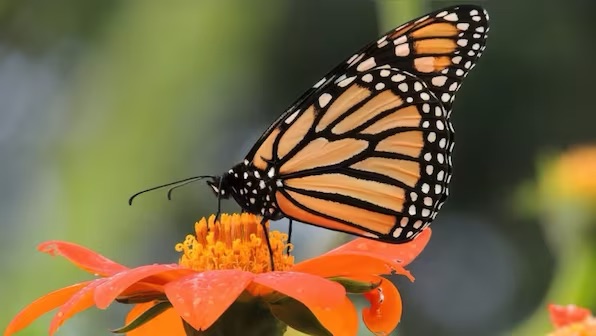
Insects, with their unparalleled diversity, play a unique and crucial role in the Earth’s environment. They may represent a small proportion of biomass, but their impact on sustaining balanced food webs and accelerating the nutrient cycle is immense. Their importance, often underappreciated, is what makes their global population decline a matter of concern.
The majority of insect populations have shown downward trends in recent years, and this is occurring for three main reasons. The first is climate change. The changing weather is increasing the environmental pressure on species, which is causing population declines. Increasing human populations are also causing a variety of habitat loss due to demand for housing and agricultural intensification. Both of these problems are only going to get more severe as time progresses. Finally, invasive species are causing native insects around the world to be outcompeted for resources. This can occur for two main reasons. As described, habitats are decreasing due to climate change and agricultural intensification which concentrates fauna into smaller areas. This increases competition between species and reduces populations. Also, new non-native species can be introduced by humans and have a similar competition effect.
These declines are hugely worrying and have to be monitored. Part of this monitoring is through counting insect populations and sorting them by species. Insects are often sorted by hand and identified through a microscope. This is an inefficient method which can take a long period to complete. There is also a chance of human error through misidentification which will cause insects to be sorted into the wrong species. It is hard to minimise this error without changing the methodology. An innovative new method to combat this is using automated image classification. This involves creating an image dataset which can then be placed into a classifier. This will be trained to automatically identify the species according to the morphological features shown in an image. BIODISCOVER is an example of a multiview imaging component machine which utilises this. There are a variety of scientific papers that have performed image classification on data using this machine. Arje et al. (2020) found an image classification success of 98% for 598 insect specimens, which is very impressive. However, this paper highlights that the machine does not identify as accurately for species with less than 50 samples. Not only did the machine identify samples accurately, but it also saved time on average compared to sorting manually. The machine can also provide the length of a bug, which can be used to calculate biomass. This is a variable that often cannot be measured by hand. This method could be used for future studies to accelerate the sorting process and increase accuracy.
An image classifier is an innovative new method that could revolutionise the ecological discipline. It saves time and provides more accuracy for insectologists. The only problem with the technique is it is relatively untested, and the machines can be expensive. An app could be created to identify insects. This is already a reality for flowers, with the app called “PictureThis – Plant Identifier”. This app allows users to identify plants by taking pictures of them. The app has a foundational image dataset where a creator has manually identified each plant. Several different versions of this plant will then be pictured, and the classifier will learn characteristics of the plant, such as shape, size and colour. If a plant is unrecognised, the classifier will feed back to the creator, who will identify it and teach the classifier. This idea could be transferred to the insect world and sort the monitoring problem currently present with insects.







 Harri Roblin
Leave a reply to drdavidroblin Cancel reply