The unpredictable nature of volcanos make them one of the most feared geological features. In the past, they have completely destroyed cities and wiped out entire populations. For these reasons, they are a fascinating topic for the public and not just volcanologists and scientists. This article will outline the five most dangerous active volcanoes and why they should be feared. They will be placed on a list where number one is the most dangerous. A variety of factors make a volcano dangerous, including eruption frequency, potential magnitude of eruption and proximity to human populations.
5) Mount Vesuvius, Italy
Vesuvius is one of the most infamous volcanoes ever and is a popular tourist destination at present. Its most famous eruption in 79 AD buried the city of Pompeii and ultimately created a tsunami that killed thousands. Volcanologists still classify this volcano as active despite no major recent eruptions. It has had eight major eruptions over the last 17,000 years with its most recent in 1944. A total of six million people live in the vicinity of Vesuvius, making another eruption very concerning. Vesuvius’s most notable eruption feature in 79 AD was the pyroclastic flow that hit Pompeii, followed by a covering of calcified ash, which preserved the shape of deceased bodies. An eruption of Vesuvius in today’s age would be catastrophic for the local area.
4) Mount Merapi, Indonesia
Mount Merapi, the most active volcano in Indonesia, has recently demonstrated its potential for destruction. In a small eruption in December 2023, the volcano claimed the lives of eleven climbers, serving as a stark reminder of its current state of activity. With a history of frequent eruptions for 400,000 years, the most recent major event was in 2010, causing over 300 fatalities and a widespread evacuation in the surrounding areas. The fact that around 70,000 people live in the vicinity of this stratovolcano is a chilling reminder of the potential for a devastating number of fatalities if an unexpected and large enough eruption occurs. The main threats of the volcano are its pyroclastic flows, lava domes, and lahars, all of which pose a significant risk to the surrounding population.
3) Mount St. Helens, USA
Mount St. Helens is a stratovolcano located in Washington as part of the Cascade Range. It has a horseshoe-shaped crater caused by its 1980 eruption. This was the largest and most destructive eruption in US history, causing 57 deaths and huge ecological destruction to the local area. The violent nature of this volcano makes it very likely to erupt again, with it being one of the most active in the USA. Another eruption would cause ash to fall across wide areas of the Northwest states. Pyroclastic flows and lahars would also be released which would mainly affect the areas local to the volcano. There are about 12,000 people that live locally. The unpredictable and consistent nature of eruptions makes it very dangerous and vital to monitor.
2) Mount Pinatubo, Phillipines
Mount Pinatubo is not known for regularly erupting, but it is notorious for the 1991 eruption, which rocked the Philippines. This killed at least 700 people as the large-scale pyroclastic flow engulfed the surrounding area. Locally, there are 21 million people living in the vicinity of the volcano currently, so an eruption would have a huge impact on these residents. It is important to note that the Philippines is not as developed as some of the other countries on the list, meaning their evacuation strategy will be slower and not as large scale. This makes the volcano even more dangerous, especially with an unpredictable eruption.
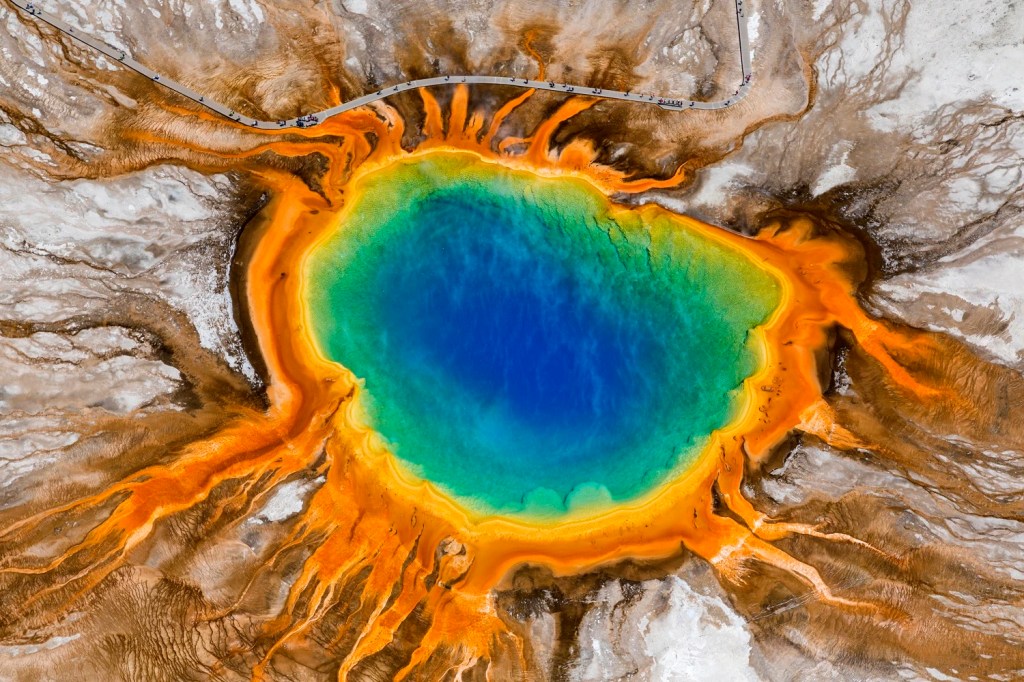
1) Yellowstone Caldera, USA
The Yellowstone Caldera, a supervolcano, claims the top spot on this list for a reason. While it may not erupt often, with a major event occurring around every 750,000 years, the sheer magnitude of a possible eruption is what makes it so dangerous. Volcanologists predict that such an eruption could lead to a change in worldwide climate for decades, causing a significant drop in temperature. The main effect would be the spread of volcanic ash, which would bury large areas of the American Midwest states. Smaller volumes of ash would be spread further and have devastating effects on plant and animal life, especially birds. The size of this volcano, fortunately, means that a variety of warning signs would be exhibited before an eruption, including large seismic activity. This would allow for an evacuation plan, which the states surrounding the volcano will already have in place, but the potential global impact of such an eruption is a sobering reminder of the danger it poses.





 Harri Roblin
Leave a comment