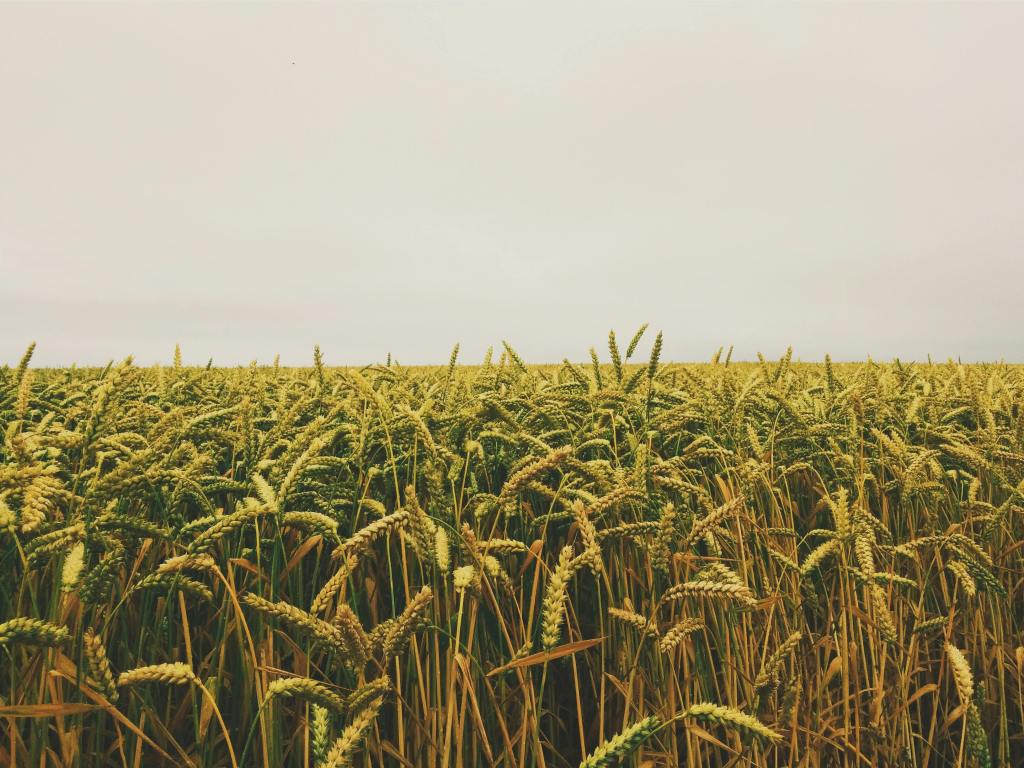
Water-saving agriculture refers to the farming technique of reducing the amount of water used on plants while sustaining the same yields. This can be important as agriculture currently uses astronomical levels of water. For example, ‘agricultural water use accounts for over 70% of the total water usage’ in China (Wang, Liu and Zhang, 2002). This paper talks about how from a food security perspective, it is important to promote this technique. Also, in countries where water is scarce, saving water while growing crops can be vital to redistribute for other purposes such as drinking. To achieve water-saving agriculture, breeders and biotechnologists can manipulate plant genotypes to promote species developing certain water-saving genes. This can take a long period of time but once the gene is in the population, it can spread as the plants reproduce. There are several of these traits that can be developed. These traits can often play hand in hand with crop drought tolerance, where the susceptibility of plants to drought environmental pressures is attempting to be reduced.
The simplest trait that plant breeders have tried to adjust is the root systems of the plant. This can play a massive part in increasing the efficiency of the water uptake of the plant. During a drought, this a vital due to the minimal amount of water available. This involves breeding crops with the best root systems; normally consisting of long, wide roots to maximise surface area and reach for water uptake efficiency. A paper by (Tron et al., 2015) found that the most efficient root architecture depended on the hydrological scenario. However, having a root system which is dense near the surface is the best trait for exploiting soil moisture. This is for systems where the water supply is provided solely by rainfall events. The differing optimal root systems based on the hydrological situation suggest that even though having an optimal root architecture for water uptake is important for drought-resistance and water-saving agriculture, it may not be the same system in both cases.
A plant trait that has been used to improve crop drought tolerance is by adapting drought-related genes. This involves manipulating and encouraging the presence of certain genes in the genotype. For example, scientists overexpressed a gene called ACBP2 in Arabidopsis (Du et al., 2012). This promoted stomatal closure which in turn reduced water loss due to transpiration. This means in drought conditions, the plant would lose less water. This is compatible with water-saving agriculture too, as plants will have to be irrigated less often as they are losing less water. Linking to the ACBP2, it also down-regulates the expression of ABA. ABA plays a pivotal role in the status of the stomata with less ABA signalling causing the stomata to be closed more frequently. A lot of the genomics around improving drought resistance in plants involves trying to supress ABA-signalling so the plant does not lose as much water due to transpiration.
Certain leaf characteristics can be vital in increasing drought resistance in plants. Waxy cuticles are a water-resistant layer on the leaf’s surface which reduces transpiration from the leaf. A paper by (Zoran Ristić and Jenks, 2002) found an inverse relationship between water loss and waxy cuticle thickness in maize. This suggests that plant breeders can encourage plants to develop thicker cuticles to minimise water loss. This will be beneficial in drought-resistant plants but also for water-saving agriculture as plants will have to be watered less often. However, the only negative to this is a thicker cuticle also makes it more challenging for carbon dioxide and light to enter the leaf. Therefore, plants with thicker cuticles might lose less water due to transpiration but might also be unhealthy due to less efficient photosynthesis. However, the plant properties could then be adjusted to create plants carrying out C4 photosynthesis rather than C3. This is a more efficient photosynthesis pathway and could counteract the change due to the cuticle thickening.
Another method that crop breeders and biotechnologists use is attempting to adjust the crop growth period. This can involve making the crop growth period as short as possible as an escape strategy; this lets the crop be affected by drought for the shortest period of time. The other method is to make the crop duration longer by making plants ‘stay green’. This will allow crops to survive the drought period and then continue to grow when rainfall starts again. Out of all the traits, this is the least applicable to water-saving agriculture as it does not alter the amount of water it takes for a plant to grow. The only effect it has is the length of time this water is administered over.
The osmotic potential of plants can also be adjusted to maximise the amount of water uptake due to osmosis. This involves genetically altering the plant using osmolytes in order to keep the osmotic potential in roots so they can keep the osmosis gradient. This helps counteract drought stress as the plant takes in a greater volume of water. This can also be used in water-saving agriculture as it saves the farmer from having to irrigate the plants as often. Several papers support this theory and believe that mastering osmotic adjustment in plants could really help plants deal with drought stress (Chaves and M. Margarida Oliveira, 2004).
To conclude, there are lots of different methods where breeders and biotechnologists can improve crop drought tolerance which is compatible with water-saving agriculture. Both methods focus on attempting to keep yield at the same level at lower water levels. The most efficient methods are osmotic adjustment, altering root architectures and changing the genotype of these plants. Once these traits have been wide spread introduced into plant populations, there will be a lot more opportunities to try water-saving agriculture techniques.






 Harri Roblin
Leave a comment